Growth
Growth Isn’t Linear — It’s Contextual
Growth, Perspective, and the Environment We’re Planted In
◇ ◇ ◇
When you hear the word growth, what do you think of?
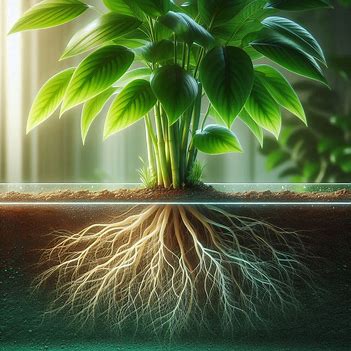
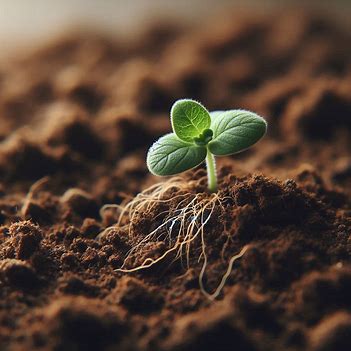
For me, I think of a plant — starting as a seed, growing its roots, drawing nutrients from the soil around it, and slowly stretching upward toward the sun so it can photosynthesize the energy it needs to live.
There’s a scientific explanation for this process now, but there wasn’t always. And by “there wasn’t always,” I mean we didn’t always have that understanding — as human beings. That, in itself, is also part of growth. Our species has grown through observation, curiosity, and the willingness to revise what we think we know.
I bring this up because when I find myself in another period of personal growth — especially when the growing pains feel heavy — I return to this image of the seed and the process it goes through.
Does the seed know it will eventually reach the light?
Does it know how long that time in the light will last?
Does it know that energy never disappears — only changes form?
Probably not.
And yet, it grows anyway.
I think about this in relation to my own life — and how growth can be necessary, frightening, and yet also deeply invigorating and beneficial.
What stands out to me most is how much the perspective I take during the phase of growth I’m in shapes how I experience it.
That doesn’t mean shifting perspective is easy. In fact, it often takes real effort. Sometimes I clearly remember the moment I decided to shift my view. Other times, the shift happens quietly — almost without my noticing — usually when I’m already on an upswing.
And then there are moments when the soil feels heavy, dark, and suffocating. Those are the times I recall past shifts and remind myself that this part is temporary. That doesn’t make it easy — just slightly more bearable.
Growth, in that sense, is cyclical. Like a perennial plant moving through seasons of dormancy and renewal. Sometimes awareness comes in the depths. Sometimes it comes in the light. Both matter.

Growth is inevitable.
But growth is really just another word for change — viewed through a more affirming, empowered lens.
Change itself is unavoidable. What differs is how we relate to it. The same change can be experienced as expansion, as challenge, or as a threat to the status quo — depending on mindset, context, and the stories we tell ourselves about what growth is supposed to look like.
In that sense, growth isn’t something that simply happens to us. It’s something we participate in.
And the lens we use matters.
Reflective Pause
How do I usually relate to change — as something happening to me or something I’m participating in?
What story do I tell myself about growth when it feels uncomfortable?
What shifts when I view change through a more compassionate lens?

◇ ◇ ◇
Growth Pains Aren’t a Sign You’re Doing It Wrong
There’s a tendency to think growth should feel empowering all the time. But growth often comes with discomfort, uncertainty, grief, and fatigue. Sometimes it comes with outgrowing parts of your life before you know what’s meant to replace them.
That doesn’t mean something is wrong.
It means something is changing.
Your mindset affects your mood.
Your perception shapes your mindset.
And the mindset of the people you interact with inevitably influences your growth as well.
Growth doesn’t happen in isolation.
Reflective Pause
Where do I feel supported in my growth — and where do I feel drained?
What emotions tend to surface when I’m in a period of change?
What would it mean to stop interpreting discomfort as failure?

◇ ◇ ◇
The Garden You’re Planted In Matters
Back to the plant analogy.
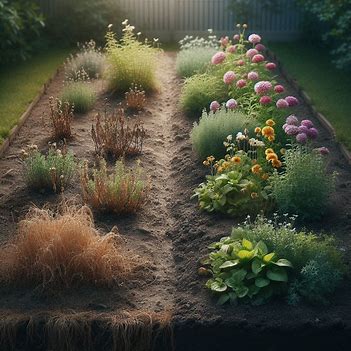
If you’re a plant growing in soil that’s depleted — surrounded by others competing for the same limited nutrients — growth becomes a fight. Survival takes precedence over thriving.
That’s one way to understand growth.
Another way is this: imagine a garden intentionally prepared with rich soil and diverse nutrients — where plants need different things, and the environment supports those differences.
In that kind of garden, growth doesn’t require constant struggle. It happens because the conditions allow it.
Neither garden is good or bad.
They simply produce different outcomes.
Now let’s bring this back to people.
If you’re naturally growth-oriented — curious, reflective, open-minded — and the environment around you is resistant to change, something will shift over time.
Either:
you will expend energy lifting, translating, or shrinking parts of yourself
oryou will slowly adapt to the mindset around you
That isn’t a failure of character.
It’s human resonance.
We attune to what we’re surrounded by. We mirror. We normalize. We adapt.
No matter how strong you are, your environment leaves an imprint.
The question isn’t if — it’s how consciously.
Reflective Pause
Where do I feel most like myself?
What environments support my curiosity and openness?
Where do I feel the need to shrink or over-explain?

◇ ◇ ◇
Sustainable Growth Happens in Stages
None of this means you need to cut people off or uproot your life overnight.
Growth that lasts is usually gradual.
Intentional.
Responsive — not reactive.
It happens one adjustment at a time:
noticing where you feel nourished versus depleted
recognizing what environments support your expansion
allowing yourself to seek spaces and relationships aligned with where you’re going
Growth doesn’t require force.
It requires awareness.
Closing Reflection
Growth isn’t a straight line upward.
It’s cyclical.
It’s contextual.
It’s shaped by both the soil you’re planted in and the perspective you bring with you.
Sometimes growth feels like reaching toward the light.
Sometimes it feels like being buried in the dark.
Both are part of the process.
And neither means you’re behind.