
The Final Stage of Growth: Death, Rebirth, and Becoming Your True Self
The Death and Rebirth Stage of Growth
Retiring Old Identities and Returning to Your True Self
♠ ♠ ♠
When the Old Version of You No Longer Fits
If I had to say one thing about the death and rebirth stage of growth, it’s this:
Not knowing what life is going to look like next is often the hardest part.
There’s a deep uncertainty that comes with this stage.
You’ve gotten used to the way things were — the routines, the environments, the people, the familiar thought patterns. Even if those patterns weren’t perfect, they were known.
And letting go of what’s known can feel terrifying.
But eventually you reach a point where you realize you’ve learned everything you could from that cycle. You’ve reached the maximum growth available in those places, with those people, and within that version of yourself.
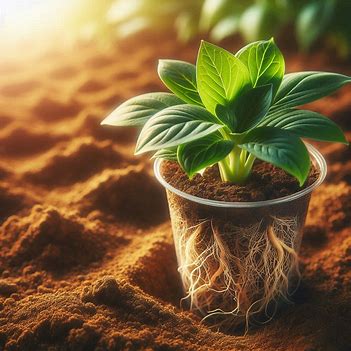
I often think of it like a plant growing in a pot.
If the plant stays in the same pot too long, its roots begin to run out of space. They start circling inward, tangling into a root ball. Eventually, the plant can’t continue growing unless it’s repotted into something larger — or placed directly into the earth.
Human growth can work the same way.
Sometimes the only way to continue growing is to move beyond the container that once sustained you.
Reflective Pause
• What parts of my routine or environment feel too small for who I’m becoming?
• What might become possible if I allowed myself to grow beyond this container?
• What signs tell me it may be time to expand into something new?
♠ ♠ ♠
The Cycles We Move Through
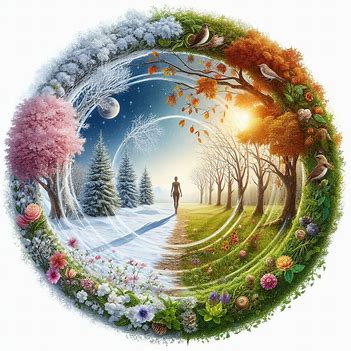
Like plants — as I’ve mentioned throughout this series — we move through cycles.
Sometimes we’re aware of them.
Other times we’re moving through them unconsciously.
But growth is an inherent part of the human experience.
Whether we participate in that growth consciously is what often determines the difference between living and merely existing.
When I look back on my life, I can see how many death and rebirth cycles have shaped who I am today.
The death of the helpless one.
The birth of the self-sufficient one.
The death of the doormat.
The growth of the sovereign.
The death of the small one.
The emergence of the space taker.
And many more.
Each version of myself served a purpose at the time.
But none of them were meant to last forever.
Reflective Pause
• When I look back on my life, what major growth cycles can I recognize?
• What strengths were born from those transformations?
• What lessons did those transitions teach me about myself?
♠ ♠ ♠
Why Some Growth Cycles Take Longer
Something else I’ve noticed about these cycles is how different their pacing can be.
Sometimes growth happens incredibly quickly.
You move through stages almost before you realize what’s happening.
Other times the process is painfully slow.
Looking back, I can see that those slower cycles often contained the densest energy to release. The lessons in those stages felt heavier because they had been building for a long time — sometimes for years, sometimes for lifetimes.
Those were the patterns that took the most effort to understand and release.
Other cycles moved more quickly because the root lesson had already been learned somewhere else. The work then became clearing through the remaining layers.
And sometimes the process felt harder simply because I was tired.
Growth requires energy, and there were times when I felt completely exhausted by the work of healing and transforming.
During those moments, prayer helped.
Sometimes asking for help made the process easier.
Other times it felt like I was meant to sit deeply in the experience so the lesson could fully integrate — so I wouldn’t have to repeat it again.
Reflective Pause
• Is there a lesson in my life that seems to repeat in different ways?
• What might that pattern be trying to teach me?
• How might patience and compassion help me move through this stage?

♠ ♠ ♠
Retiring the Identities That Protected You
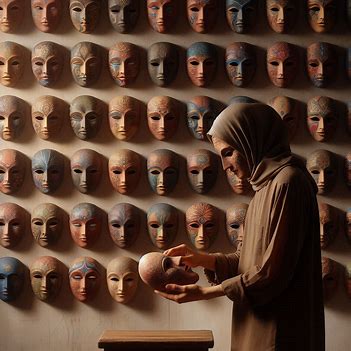
One of the biggest realizations in my own death and rebirth cycles has been recognizing the difference between identities that were created by survival and identities that are cultivated from authenticity.
Many of the identities I once carried were trauma responses.
For example, the people pleaser.
Healing that identity wasn’t just about understanding my trauma mentally. It also required somatic work — learning to trust my body’s signals, recognizing when something felt misaligned, and slowly reclaiming my agency instead of outsourcing it to others.
Another identity I had to release was the overachiever.
For years I tied my worth to being the person who could do everything for everyone — always available, always capable, never needing anything in return.
But that identity only reinforced deeper patterns of self-doubt and lack of self-worth.
And then there was the fixer.
For a long time I believed my role was to fix other people’s problems.
But fixing rarely creates lasting change.
Most of what I thought I was fixing were actually surface symptoms of deeper issues that only the other person could address for themselves.
Trying to carry that responsibility often prevented others from learning their own lessons — and it drained me in the process.
Reflective Pause
• What identities have I carried that were rooted in survival rather than authenticity?
• Which of those identities am I ready to release?
• What new qualities might emerge if I let them go?
♠ ♠ ♠
Releasing the Armor
When I look back at those identities now, I can see that they all revolved around how I related to other people.
And that makes sense.
In this life, relationships have been one of my biggest teachers.
Through therapy, reflection, and personal work, I’ve been able to see more clearly how many of those identities were protective armor — responses created by earlier wounds.
Recognizing that helped me see where my focus needed to shift.
Self-worth.
Self-love.
Self-respect.
Those were the roots underneath many of the patterns I had been working through.
But I didn’t always see that in the moment.
Understanding the purpose of those cycles only became clear when I looked back.
Only after the process had unfolded could I see how each death and rebirth was slowly leading me closer to my soul’s essence — closer to who I actually am beneath the armor.
Reflective Pause
• What emotional armor have I been carrying for protection?
• How has that armor helped me survive?
• Am I ready to begin setting it down?
♠ ♠ ♠
Honoring the Identities That Brought You Here
Retiring those identities has not been easy.
It has been painful.
It has been long.
But it has also been beautiful.
Empowering.
Even miraculous at times.
Part of this stage is honoring the versions of yourself that carried you through difficult chapters of life.
Those identities protected you.
They helped you survive.
They taught you valuable lessons.
And releasing them doesn’t mean rejecting them.
Sometimes it simply means acknowledging that their job is complete.
There can even be moments where you think:
But I liked that version of me.
I understood her.
I knew how she showed up in the world.
That familiarity can make change feel unsettling.
But letting go doesn’t mean everything about that version of you disappears.
Energy never truly dies.
You can keep the parts that still align with who you’re becoming and release what no longer serves the path ahead.
Reflective Pause
• If I could thank my past self for something, what would it be?
• What wisdom did those experiences leave me with?
• How might that wisdom guide my future choices?

♠ ♠ ♠
The Freedom of the Unknown
One of the most surprising parts of the death and rebirth stage is that the uncertainty eventually becomes something else.
Freedom.
Because when the old identity dissolves, the future becomes open again.
Nothing is fully predetermined.
You can approach the next stage with curiosity.
With creativity.
With a sense of adventure about what might be possible.
And when I look back at where I’ve been — and who I’ve been — compared to where I am now, I can see how every one of those cycles has shaped me into someone I respect.
Someone I love.
Someone I trust.
Someone I have faith in.
Reflective Pause
• What new opportunities might open if I allow myself to evolve?
• What parts of the unknown might actually be invitations?
• How can I approach this stage with curiosity instead of control?

♠ ♠ ♠
Closing Reflection
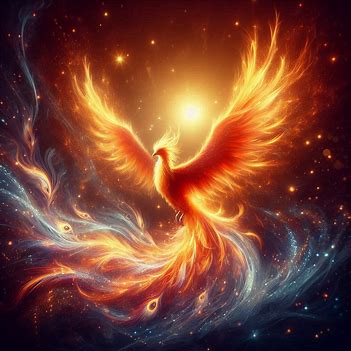
Every cycle of growth is an invitation to return to yourself. The identities we shed, the lessons we integrate, the patterns we release — all of it slowly clears the path back to our soul’s essence. What begins as survival eventually becomes self-discovery, and what once felt like endings begin to reveal themselves as transformations. Death and rebirth are not punishments from life; they are reminders that we are meant to evolve. Each time we move through the cycle, we come a little closer to living in alignment with who we truly are.
♠ ♠ ♠
Author’s Note
This growth cycle series is an exploration of the patterns I’ve come to recognize in the human journey — the rhythms of expansion, pause, reflection, release, and renewal that shape our lives in ways we often only recognize in hindsight.
These cycles are not meant to be rigid or prescriptive. Each person moves through them differently, guided by their own experiences, values, and inner knowing.
If these reflections resonate with you, my hope is that they offer reassurance that growth is not a linear race to improvement, but an unfolding process of remembering who we are beneath the layers of experience, expectation, and survival.
